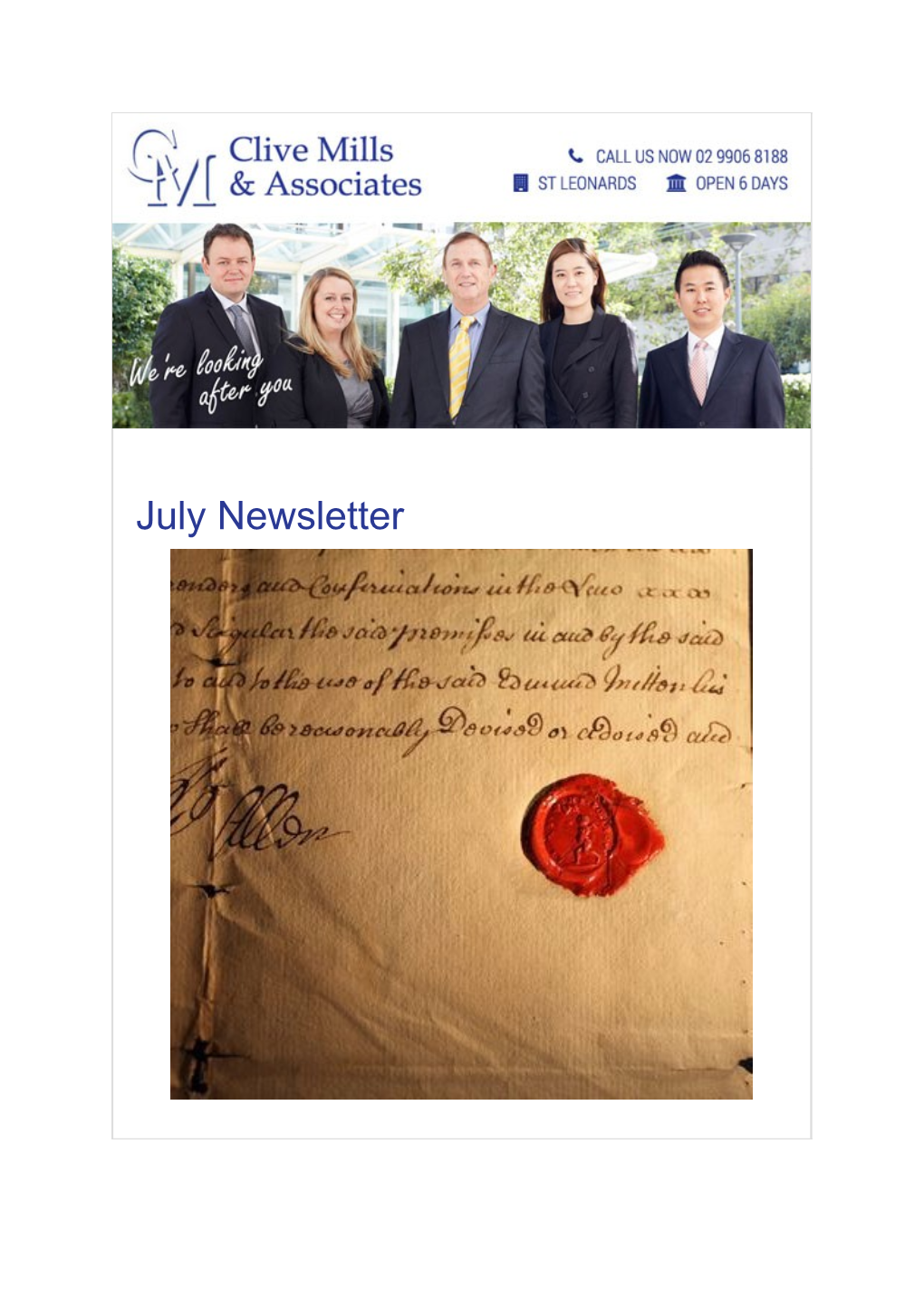
Notary Publics? What are they and When might you need one?
Historical Background
The office of aNotary Publichas its origin in the civil institutions of ancient Rome. Over time, Notaries’ certificates and seals came to be recognised as public acts in much the same way as a document under the seal of a Court.
When the Roman Empire went into decline, the Holy Roman Empire became the successor of the Roman Emperors and assumed the power to appoint notaries. In the 13thCentury, popes assumed the right to appoint notaries to act outside the papal states.
In the 16thCentury, Henry VIII adopted a confrontational attitude to continental Europe (generally understood today as the 16thcentury equivalent of “Brexit”), when he caused theEcclesiastical Licences Act 1533to be passed and he set up aCourt of Facultiesunder the jurisdiction of the Archbishop of Canterbury. That Act stated that subjects of the King had been greatly impoverished by reason of “the intolerable exactions of great sums of money”taken out by the Pope and the See of Rome fordispensations, faculties and licences. From that time, the Archbishop of Canterbury has been responsible for appointing notaries in England.
“Plus ça change plus c’est la meme chose”- you might think from recent events, and that history seems to be repeating itself from an English perspective as present day England appears to have much the same concerns today as Henry had about his neighbours from across the English Chanel and beyond.
Since 3 January 1986, appointments of notaries in New South Wales were made by the Supreme Court of New South Wales under thePublic Notaries Act 1985although the Archbishop of Canterbury continued to make appointments.
The 1985 Act was repealed by thePublic Notaries Act 1997. Although the Supreme Court still makes the appointments, suitability of appointment of notaries is determined by the Legal Profession Admission Board.
Notary Publics in New South Wales are appointed “for life” and must be practising solicitors with a minimum of 5 years practical experience.
A New South Wales Notary Public isrecognisedby overseas governments and official bodies andthroughout the world.
Functions
For most notaries, about 95% of their functions comprise acting as an “International JP” verifying signatures on documents or authenticating documents for use overseas.
Notaries do this by impressing a seal, usually red in colour, upon the document in question.
In Roman and Medieval times, much probative force was attributed to documents bearing an impressed seal by reason of the better protection against forgery.
Typical requests to a Notary Public include:
- Verifying professional qualifications held by professionals such as Australian doctors and engineers in a variety of countries overseas
- Witnessing the signing of a corporate power of attorney for use in other countries
- Witnessing the swearing, or affirmation, of affidavits or statutory declarations for use in other counties
- Witnessing documents required for obtaining probate in respect of the administration of deceased estates in overseas countries
- Witnessing the signing of contracts in international trade, for example where an Australian-based company is setting up a new office in another country.
Some, but by no means all, overseas entities requireadditional formality(over and above the notary’s seal affixed to the document)before they will accept a document signed in another country such as Australia – particularly by way of confirmation that the notary sealing the document is indeed a duly qualified and authorised notary.
In this regard, the Australian Department of Foreign Affairs and Trade (“DFAT”) is able to issueApostillesfor use in relation to documents to be used in other countries which, like Australia, are also members ofThe Hague Conventionof 5 October 1961.
A notary will generally sign the document in question and an officer of DFAT will then attach an Apostille which is a DFAT seal confirming, amongst other things, that the Australian notary is indeed duly authorised and qualified to impress, or attach, his, or her, seal upon the document. That process will generally be deemed sufficient for its purposes by the overseas body.
However, where a country, such as, for example,Brazil,CanadaorDenmark, who are not a member of the Hague Convention, requires such formality, an additional step in the process of verification is required whereby, after the notary has attached his seal to the document in question and, an officer from DFAT has verified the notary’s qualifications, then additionally a consular official of the country where the document is to be used will “legalise” the document by verifying the DFAT official’s signature as well as the qualifications of the notary.
For a complete list ofmembercountries andnon-participateof the Hague Convention please see the links below:
- What are the Member Countries of the non-participate Hague Convention?
- What are the Member Countries of the Hague Convention?
Clive Mills
Who is going to look after you when you are no longer able to look after yourself?
There is an 18thcentury proverb:
“Hope for the best and prepare for the worst” .
Some nearly 300 years later it still rings true today.
But, have you ever stopped to seriously consider what may happen if you were no longer able to take care of yourself? Who would pay your bills, ensure payment for your medical treatment, or even your mortgage repayments?
Who would tell your doctors what type(s) of medical treatment you would like to have?
Who has access to your accounts? Does someone need to cancel a lease, sell some of your shares or even your sell house?
When it comes to a debilitating condition, a person’s natural response is sometimes:
“I am too young to worry about that type of thing… or… surely, if it came to that, my loved ones will be able to look after everything for me!”
Those close to you may be willing to help, but would they necessarily have the requiredlegal authorityto look after your affairs for you?
Capacity, and your future needs, are something that everyone should consider now, no matter what stage of life you are in.
There are, unfortunately, a large number of ways a person can lose their mental capacity.
For example, a car accident, a stroke or a heart attack can result in partial or total mental impairment.
Dementia or Alzheimer’s disease can affect anyone even at a relatively young age regardless of your family history.
If you are unfortunate to suffer from dementia, just when will you, or others, first become aware? Will it be too late when you, or others, do become aware of the problem?
There are a number of things you can donowto give you and, those close to you, peace of mind.
There are 2 documents which you should consider:
- anenduring power of attorney; and
- anenduring guardianship appointment.
An enduring power of attorney is a legal document that allows you to appoint one or more person(s) to manage yourfinancialandlegalaffairs while you are alive.
Being anenduringappointment means that it willcontinueto have effect in the event that the principal(the appointor)loses mental capacitywhereas an appointment under ageneralpower of attorney will cease being effective upon the loss of mental capacity.
An appointment can commence at different times such as the date that you lose your mental capacity or the time that your attorney accepts his or her appointment.
The power granted to the attorney can also be unrestricted or restricted in accordance with your wishes.
An enduring power of attorney enables those close to you to deal with your bills, your bank accounts, to sell shares and even, when registered with Land and Property Information, to allow your attorney to sell and purchase real estate.
Enduring Guardianship Appointment
An enduring guardianship appointment compliments an enduring power of attorney in that it enables those close to you or, alternatively, someone you trust implicitly, to manage and make decisions about yourlifestyleand medical affairs. Your guardian is able to make decisions on your behalf in relation to such things as what medical treatment you are to receive, where, and by whom, you receive treatment and what aged care facility, if any, you should move into if required.
What if it is too late? Is there something you can do?
What if you are in the unfortunate situation where someone close to you has already lost sufficient mental capacity? Is there something you can do? Or, is it too late? What do you do?
The Guardianship Division of the Civil and Administrative Tribunal(NCAT)has power to appoint a guardian and/or a financial manager for a person who has lost mental capacity and ability to make decisions for themselves.
It can also make various other orders in relation to enduring powers of attorney and enduring guardianship appointments previously made. It can cancel or amend them.
The writer of this article has experienced and, continues to experience, first hand difficulties arising out of a loved one who has Dementia and, like most debilitating conditions, I am aware that it is the ones around you that suffer the most.
Fortunately, in my personal experience, I was able, before it was too late, to convince them to arrange for a power of attorney and guardianship to be created.
Whilst it is hard enough to watch someone you love suffer from a debilitating condition, it is as difficult to realise that you do not have the authority needed to give them all the help they need.
Now wheredidI put my keys!??
Daniel Willcockson